





0102030405
China Suppliers Factory for Fused Cast AZS Block RTK-AZS36 - High Resistance to Molten Glass Corrosion
Brief Introduction
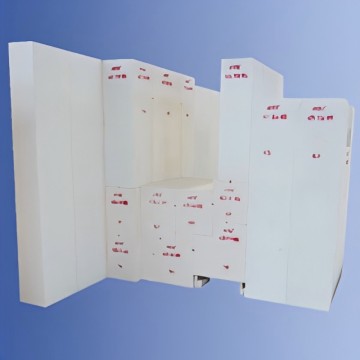
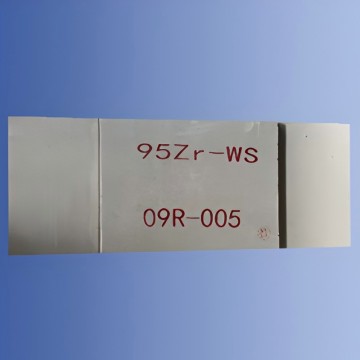
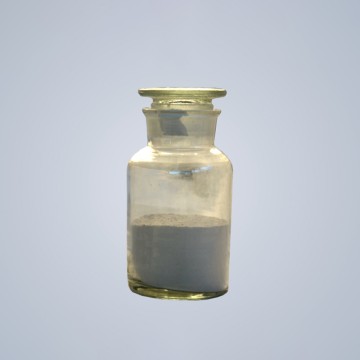
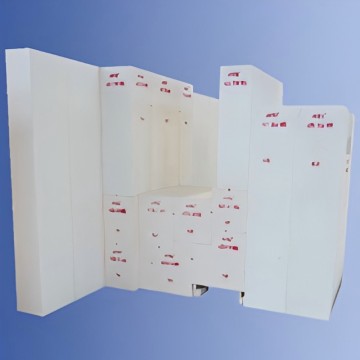
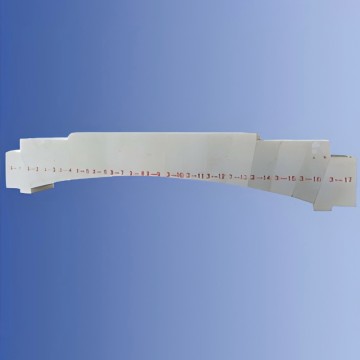
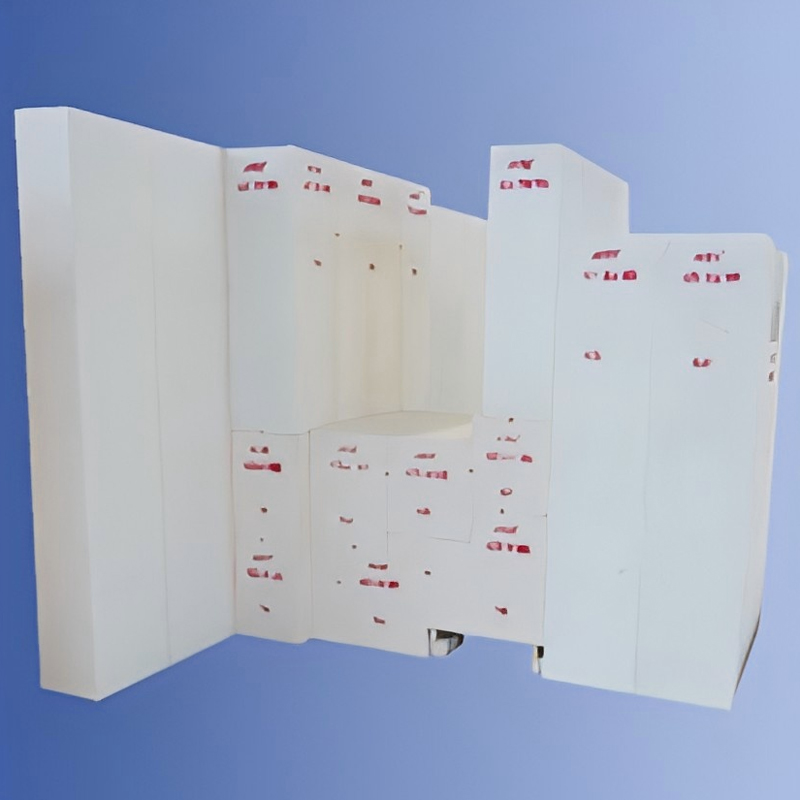
RTK fused cast AZS blocks are made of high-quality purified raw materials, using a special electric arc furnace, and a fused cast process that has undergone long arc melting and oxidation treatment. This process has almost no carbon contamination from the electrode. Due to the oxidation fused cast process and the use of high-purity raw materials, RTK fused cast AZS series have special and high resistance to the corrosion of molten glass, and have little contamination to the molten glass.
Fused cast AZS products can be divided into 41# AZS block (RTK-AZS41), 36 # AZS block (RTK-AZS36) and 33 # AZS block(RTK-AZS33) according to the different ZrO₂, content in the chemical composition. In addition, on the basis of RTK-AZS36 and RTK-AZS33 manufacturing processes, the content of corresponding chemical components of SiO₂ and Na₂O has been reduced, and two products, 36 # low silicon low sodium AZS blocks (RTK-AZS36D) and 33 # low silicon low sodium AZS blocks (RTK-AZS33D), have been formed. These five products are further classified according to different casting methods, which can meet the different use requirements of fused cast products in glass furnaces.
RTK-AZS36 is a standard oxidation fused cast AZS block, which has the characteristics of particularly high resistance to the corrosion of molten glass and low contamination, and its performance in these two aspects is balanced. It is applicable to the parts in direct contact with the molten glass in the glass furnace, such as the side wall of the melting end, the paving tiles and the doghouse.
Chemical Composition
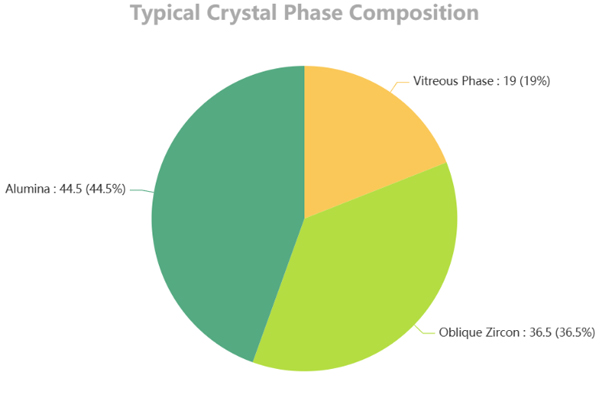
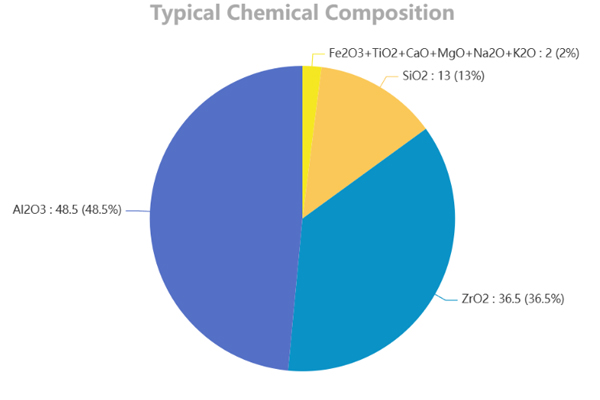
| CHEMICAL COMPOSITION | TYPICAL VALUE |
|---|---|
| SiO₂% | 13.0 |
| Ai₂O₃% | The Remainder |
| ZrO₂% | 36.5 |
| Fe₂O₃+TiO₂+CaO+MgO+Na₂O+K₂O% | ≤2.0 |
Physical Property
| PHYSICAL PROPERTY | TYPICAL VALUE |
|---|---|
| Bulk density (dense part) g/cm3 | 3.90 |
| Apparent porosity (dense part) g/cm3 | 0.8 |
| Initial precipitation temperature of vitreous phase°C | 1400 |
| Vitreous phase exudation (1500°CX4hr)% | 2.3 |
| Anti-molten glass erosion speed under static condition mm/24hr (1500°CX36hr, ordinary soda lime glass) | 1.3 |
| Bubble release rate % (1300°CX10hr, ordinary soda lime glass) | 1.0 |
| CALCULATE SPECIFIC GRAVITY | |
| Ordinary casting / inclined casting g/cm3 | 3.55 |
| Quasi-non shrinkage casting g/cm3 | 3.80 |
| Non shrinkage casting g/cm3 | 3.85 |
Frequently Asked Questions (FAQ)
What is the primary application of RTK-AZS36 blocks?
RTK-AZS36 is primarily applied to parts in direct contact with molten glass in glass furnaces, such as the sidewalls of the melting end, paving tiles, and doghouse structures.
What makes RTK fused cast AZS blocks resistant to contamination?
They are manufactured with high-purity purified raw materials and undergo an oxidation fused cast process via a long arc electric furnace, leaving virtually no carbon contamination from the electrode.
How are different AZS block products categorized?
AZS products are classified based on their ZrO₂ content (e.g., RTK-AZS41, RTK-AZS36, RTK-AZS33), reduced silicon/sodium formulations (AZS36D, AZS33D), and specific casting methods.
What is the typical ZrO₂ content in RTK-AZS36?
The typical ZrO₂ content in an RTK-AZS36 block is 36.5%, balanced with approximately 13.0% SiO₂ and Al₂O₃ as the remainder.
What are the specific gravity variations based on casting methods?
The specific gravity is 3.55 g/cm³ for Ordinary/Inclined casting, 3.80 g/cm³ for Quasi-non shrinkage casting, and 3.85 g/cm³ for Non-shrinkage casting.