Leave Your Message
0%

So, why pick Glass Furnace Chrome Magnesite refractory? Honestly, it all boils down to dealing with heat, corrosion, and how you run things. Inside a glass furnace, those refractory blocks are constantly battling against molten glass, alkali vapors, the ups and downs of thermal cycles, and a lot of mechanical stress. The cool thing about chrome magnesite is that it combines magnesia’s ability to handle really high temperatures with chromite’s resistance to chemical attack. That means it can help protect key areas like the sidewalls, breastwalls, and checkerwork structures — basically, the nerve centers of the furnace.

Now, a lot of folks think refractory performance is just about temperature — but Dr. William E. Lee, who’s pretty much an expert in advanced refractory materials, puts it nicely: "Refractory performance is never only about temperature; it’s about chemistry, design, and maintenance all working together." It’s a practical take. Sure, your furnace might hit 1,600°C, but damage can happen way earlier because of local reactions or stress points.

People love chrome magnesite mainly because its dense structure helps fend off the aggressive stuff in glass that tries to penetrate. Plus, if you install it right, it can last longer, making your campaign smoother overall.

But here’s the thing — tiny details really matter. Major manufacturers like RHI Magnesita, Saint-Gobain, and Vesuvius don’t just toss any grade of material into the furnace. They check raw material purity, porosity, resistance to corrosion, and how it behaves with heat before making a call. Still, you’ve gotta match the material to your specific glass type and working conditions. No refractory is perfect across the board — that’s just a fact.

Something as simple as poor joint placement, uneven expansion, or firing conditions that aren’t spot on can cut short the lifespan of your refractory. Getting these things right often depends just as much on good storage and skilled installation as on the material itself. So, choosing the right Chrome Magnesite isn’t just about reading datasheets — it’s about experience, lab tests, and understanding your furnace’s history. Sometimes, a tiny overlooked detail ends up being the game changer.
Why Choose Glass Furnace Chrome Magnesite Refractory?

Glass Furnace Zones and Their Refractory Performance Requirements

Why Choose Glass Furnace Chrome Magnesite Refractory?

A glass furnace contains several zones, and each zone challenges refractory materials differently. The crown faces intense flame radiation and sustained temperatures. It needs low deformation and stable structural strength over long campaigns. Chrome magnesite refractory can perform well here when the design controls thermal stress and load conditions.

The sidewalls and breastwalls contact hot glass vapors, dust, and volatile alkali compounds. These agents may penetrate pores and accelerate corrosion. Dense Chrome magnesite structures can reduce infiltration and maintain resistance in severe service. However, density alone is not enough. Correct firing, joint quality, and furnace atmosphere also influence performance.

The bottom and paving areas endure glass contact, mechanical wear, and temperature changes during operation. They require strong corrosion resistance and reliable dimensional stability. The throat faces a particularly aggressive combination of heat flow, glass movement, and chemical attack. Material selection must match the actual glass composition and operating schedule.

Small details matter. Uneven installation can create local hot spots. Rapid temperature changes can expose hidden weaknesses. A thicker lining is not automatically safer. This is where practical inspection and measured engineering judgment matter. In some furnaces, chrome magnesite may be an excellent choice; in others, another refractory design could perform better. The decision should follow zone temperatures, corrosion data, thermal gradients, and maintenance experience.

Chrome-Magnesite Chemistry: 15–30% Cr₂O₃ and 60–80% MgO

Glass Furnace Magnesite Chrome refractory is selected for demanding furnace zones. Typical grades contain 15–30% Cr₂O₃ and 60–80% MgO. The remaining chemistry includes iron oxides, alumina, silica, and processing-related constituents. MgO supports high-temperature stability, while Cr₂O₃ improves resistance to aggressive glass contact. This balance matters near the doghouse, sidewall, and melting end.

The USGS Mineral Commodity Summaries 2025 estimates 2024 global chromite mine production at approximately 41 million metric tons. That scale reflects chromite’s established industrial importance. The European Commission’s Glass BAT Reference Document also identifies refractory wear as a significant operational concern. In practice, chrome-magnesite bricks can resist alkali-rich melts better than many basic alternatives. However, chemistry alone is not enough. Small details matter. Open porosity, furnace atmosphere, thermal cycling, and joint design can accelerate penetration.

A 15% Cr₂O₃ grade may behave differently from a 30% grade under the same flame pattern. Higher chromium content does not automatically mean longer service life. Engineers should compare chemical analysis with bulk density, apparent porosity, thermal shock data, and corrosion testing. A dense, well-fired texture usually limits melt movement through pores. Yet installation quality can undermine good material. Misaligned joints and uneven expansion remain common weaknesses. Responsible selection should also consider end-of-life handling, because chromium-bearing refractories require controlled waste practices. Data sheets are useful, but furnace history is often more revealing.

Thermal Stability Above 1,500°C in Glass-Melting Operations

Why choose Glass Furnace Chrome Magnesite refractory?Thermal stability above 1,500°C is the central reason.

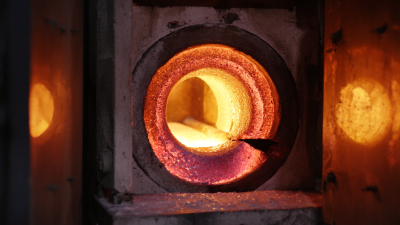
The European Commission’s 2013 Best Available Techniques Reference Document for glass manufacturing describes melting conditions commonly reaching 1,500–1,600°C. These zones expose furnace linings to alkali vapors, batch dust, molten glass, and repeated thermal cycling. Chrome magnesite combines high magnesia content with chromium-bearing phases. This structure helps resist corrosion and slows penetration by aggressive glass components. It also maintains useful mechanical strength when the hot face glows orange.

The U.S. Department of Energy’s Energy and Environmental Profile of the U.S. Glass Industry estimates that melting consumes about 60% of production energy. Stable linings can support longer Furnace Campaigns and fewer disruptive repairs. Operators should inspect joints, burner areas, and glass-contact zones closely. Small cracks can widen after several heating cycles. A dense chrome magnesite brick reduces this risk, but cannot eliminate it.

Installation quality, expansion allowance, and furnace atmosphere remain decisive. Chrome-bearing refractories also require controlled handling and disposal because service reactions may form environmentally concerning compounds. That detail is often overlooked. Material selection should combine corrosion testing, thermal-shock data, and actual furnace records. The highest listed temperature is not always the best answer. The lining must match the glass chemistry, temperature profile, and maintenance plan.

Corrosion Resistance in Alkali-Rich Glass Melts

Why Choose Glass Furnace Chrome Magnesite Refractory?

Corrosion Resistance in Alkali-Rich Glass Melts

Alkali-rich glass melts can attack refractory linings through sodium and potassium vapors. These vapors penetrate pores, react with the matrix, and weaken hot-face surfaces. Chrome magnesite refractory offers a dense structure with strong resistance to chemical infiltration. Its chromium oxide and magnesia content help reduce dissolution in demanding melting zones. Dense Chrome material can also maintain structural stability during repeated heating and cooling. That matters near the batch charging area and glass contact line.

Tips: Check apparent porosity, bulk density, and chemical compatibility before installation. Inspect joints carefully, because small gaps can collect corrosive condensates. Keep the furnace atmosphere stable when possible. Sudden temperature changes may create cracks, even in a chemically resistant lining.

No lining behaves perfectly. Field results depend on glass chemistry, temperature, airflow, and installation quality. A lining that performs well in one furnace may wear faster in another. Regular inspections should record surface texture, joint condition, and any unusual discoloration. These details help distinguish alkali corrosion from thermal damage or mechanical wear. Careful observation is essential. Tacit assumptions often cause costly mistakes.η

ASTM C20 Metrics: Density, Porosity, and Water Absorption

Why Choose Glass Furnace Chrome Magnesite Refractory?

Glass furnace chrome magnesite refractory is selected for its resistance to heat, molten glass, and chemical attack. ASTM C20 testing gives engineers three useful measurements: density, apparent porosity, and water absorption. Each value describes a different part of brick quality. Bulk density shows how much solid material occupies a given volume. Higher density often indicates fewer internal voids, but it does not guarantee reliable furnace service.

Apparent porosity measures connected open pores. Water absorption shows how much water enters those pores after saturation. During testing, technicians dry the specimen, weigh it, immerse it, and record the saturated mass. Small errors can affect the result. Uneven cutting, surface dust, or incomplete saturation may distort comparisons. ASTM C20 results should therefore be reviewed with the test temperature, sample location, and preparation method.

A dense brick usually limits glass penetration and reduces pathways for corrosive vapors. However, extremely low porosity may accompany manufacturing stress or poor thermal shock behavior. The term Porous Chrome should prompt careful inspection, not an automatic rejection. Field experience shows that furnace zones face different demands. A wall near the batch line may require different properties than a port arch. Strength, thermal cycling, and chemical compatibility must support the ASTM C20 data. Numbers matter. They are not the whole furnace.

Thermal Expansion and Mechanical Strength at Furnace Temperature

Why Choose Glass Furnace Chrome Magnesite Refractory?

A glass furnace faces severe thermal gradients. The European Commission’s Glass Manufacturing BREF reports melting temperatures commonly reaching 1,450–1,600°C. Chrome magnesite refractory is suited to this zone because its matrix resists chemical attack from molten glass and alkali vapors. Published refractory data commonly place its linear thermal expansion near 8–10 × 10⁻⁶ K⁻¹ from room temperature to 1,000°C. That controlled expansion helps reduce joint opening during heating. It is not zero expansion.

Mechanical strength matters when the furnace remains hot for months. Dense chrome magnesite grades can retain useful load-bearing capacity above 1,300°C. Technical testing literature often reports hot compressive strength above 20 MPa at 1,400°C, depending on porosity and chromium content. ASTM C583 and ISO 1893 methods help compare hot strength and refractoriness under load. Results still vary. Poor installation can cancel good laboratory performance.

In a Glass Furnace  Bubbling Block , repeated gas movement creates local turbulence and abrasion. The refractory must resist edge erosion around drilled channels and withstand temperature cycling during maintenance. Industry furnace surveys link longer campaign stability with low open porosity and strong thermal-shock control. However, higher density may reduce permeability and complicate drying. A carefully controlled heat-up schedule remains essential. The material is strong, but not indestructible.▋

Service Life and Lifecycle Cost of Chrome-Magnesite Linings

Chrome-magnesite refractory linings are chosen for glass furnaces because they tolerate severe heat and chemical attack. Their dense structure resists molten glass, alkali vapors, and repeated thermal cycling. In working zones, this stability can reduce joint opening, spalling, and unplanned repairs. Small details matter. Proper dry-out and controlled furnace startup often protect more value than a higher initial grade.

Service life depends on operating temperature, glass composition, furnace design, and installation quality. A lining may perform for many campaigns, yet localized wear can appear near the glass line or burner areas. Regular inspection should record wall recession, cracks, hot spots, and changes in fuel use. These observations support maintenance decisions before damage spreads. A calculation can still miss real furnace behavior.

Lifecycle cost includes more than purchase price. It covers installation labor, heating time, production losses, repairs, and disposal requirements. A longer-lasting lining may cost more initially but reduce interruptions and replacement frequency. However, longer service life is not guaranteed. Poor batch control, rapid temperature changes, or uneven burner adjustment can shorten it sharply. Careful material selection, documented installation procedures, and independent performance checks provide more reliable results. Chrome-bearing materials also require responsible handling and disposal according to applicable regulations.

Oxy-Fuel Glass Furnaces: Energy and Emissions Insights from IEA and Glass Alliance Europe Reports

Oxy-fuel glass furnaces are increasingly important in discussions about energy efficiency and emissions reduction in the glass industry. Insights from IEA and Glass Alliance Europe reports emphasize that furnace design, fuel consumption, and process emissions are closely connected. By replacing combustion air with oxygen, an oxy-fuel furnace greatly reduces the amount of nitrogen entering the combustion zone. This lowers the volume of exhaust gas and can help reduce heat losses, while also supporting better control of combustion-related emissions.

Oxy-fuel furnaces are generally designed as cross-fired melting furnaces, using mainly natural gas together with oxygen. Their lower flue-gas volume can improve thermal efficiency and simplify exhaust-gas treatment. Compared with conventional cross-fired or end-fired furnaces, energy consumption may be reduced by approximately 5–10%. When compared with a recuperative furnace, the potential reduction can reach about 25–40%, depending on furnace configuration, glass composition, operating conditions, and oxygen supply efficiency.

For producers seeking a practical pathway toward lower energy use, an oxy-fuel furnace can be considered for both new installations and major modernization projects. Evaluation should include oxygen-generation requirements, furnace capacity, expected production stability, emissions-control equipment, and long-term operating costs. With appropriate design and process management, this technology can support more efficient melting while aligning production improvements with the industry’s continuing focus on carbon reduction.

FAQS

Why is chrome magnesite refractory used in glass furnaces?

It offers strong corrosion resistance and useful mechanical strength above 1,500°C. It is not indestructible.

Which furnace zones benefit most from this refractory?

Crowns, sidewalls, breastwalls, bottoms, paving areas, and throats may require it. Each zone faces different damage.

How does it perform under alkali vapors and molten glass?

Its dense structure slows pore penetration by alkali compounds, dust, and aggressive glass components. Density alone is insufficient.

Can chrome magnesite withstand repeated temperature changes?

It can manage thermal cycling when expansion allowances, joints, and heat-up schedules are carefully controlled. Rapid changes may reveal hidden weaknesses.

What thermal expansion should engineers consider?

Published data commonly place linear expansion near 8–10 × 10⁻⁶ K⁻¹ up to 1,000°C. It does not have zero expansion.

Does the material retain strength during long furnace campaigns?

Dense grades can retain useful load-bearing capacity above 1,300°C, depending on porosity and composition. Laboratory results can mislead.

What problems can occur around bubbling blocks and drilled channels?

Gas movement may create turbulence, abrasion, and local erosion around channel edges. Maintenance adds thermal stress.

Is a thicker refractory lining always safer?

No. Thickness cannot replace correct material selection, joint quality, installation, or thermal-stress analysis. More material is not automatically better.

How should the refractory be selected for a specific furnace?

Compare glass chemistry, zone temperatures, thermal gradients, corrosion data, and maintenance records. The highest temperature is not always decisive.

What practical inspections help extend lining performance?

Inspect joints, burner areas, glass-contact zones, and local hot spots during operation and maintenance. Small cracks can widen.

Conclusion

Glass Furnace Chrome Magnesite is designed to meet the demanding conditions found throughout glass-melting furnaces. Different zones, including the melting, refining, and upper-structure areas, require refractories with excellent thermal stability, corrosion resistance, and mechanical durability. Its typical composition of 15–30% Cr₂O₃ and 60–80% MgO provides a balanced structure that can withstand temperatures above 1,500°C while maintaining strength during continuous operation.

This refractory also performs well in alkali-rich glass melts, where chemical attack and penetration can rapidly damage conventional linings. Key properties such as bulk density, apparent porosity, and water absorption can be evaluated using ASTM C20 methods to support quality control and material selection. In addition, controlled thermal expansion and high-temperature mechanical strength help reduce cracking and deformation during heating cycles. By extending lining service life, Glass Furnace Chrome Magnesite can reduce maintenance frequency, production interruptions, and overall lifecycle costs.
Sophie

Sophie

Sophie is a dedicated marketing professional at Henan Ruitai Technology Group Co., Ltd., where she harnesses her extensive knowledge of the company's products and industry trends to drive engagement and inform clients. With a strong focus on the core business areas of the company, which include......
Previous What Is a Cross Fire Furnace and How Does It Work?