Picking a reliable Jack Arch manufacturer isn’t just about comparing prices or glancing at glossy product catalogs. Honestly, most buyers need suppliers who really understand how these arches perform structurally, are familiar with regional building codes, and can handle tricky shipping conditions. This guide is here to help you figure out what to look for—things like material quality, accuracy in dimensions, past testing records, how much they can produce, and how good their customer support is. A trustworthy supplier should be upfront with clear technical drawings, details on compressive strength, tolerance ranges, and installation instructions. These details might seem small, but they're super important — especially when an arch needs to fit perfectly above a door or window opening.
And from experience, even tiny differences can cause major delays—so it’s worth paying attention to stuff like moisture protection, how they design pallets, container loading procedures, and delivery times before you place an order. Doing factory visits, checking independent lab reports, and reviewing previous export projects can really boost your confidence. That said, no single ranking or review is flawless. A manufacturer that does great in one climate might have issues with moisture or temperature swings in another region. That’s something to keep in mind.
The most reliable manufacturers are usually those who communicate clearly and aren’t afraid to answer your technical questions. They should be able to explain what materials they use, their curing processes, inspection routines, and policies on replacements. Talking to contractors or distributors who’ve worked with them can give you a better picture of how their products really perform — beyond just nice photos. Of course, cost matters too, but the cheapest quote might not include crucial extras like packaging, testing, or after-sales support.
This overview is here to help buyers worldwide compare Jack Arch manufacturers more thoughtfully — focusing on proven capabilities instead of just reputation or slick marketing. Remember, mistakes happen, so thorough documentation and setting realistic expectations are key to making a smart choice in the end.
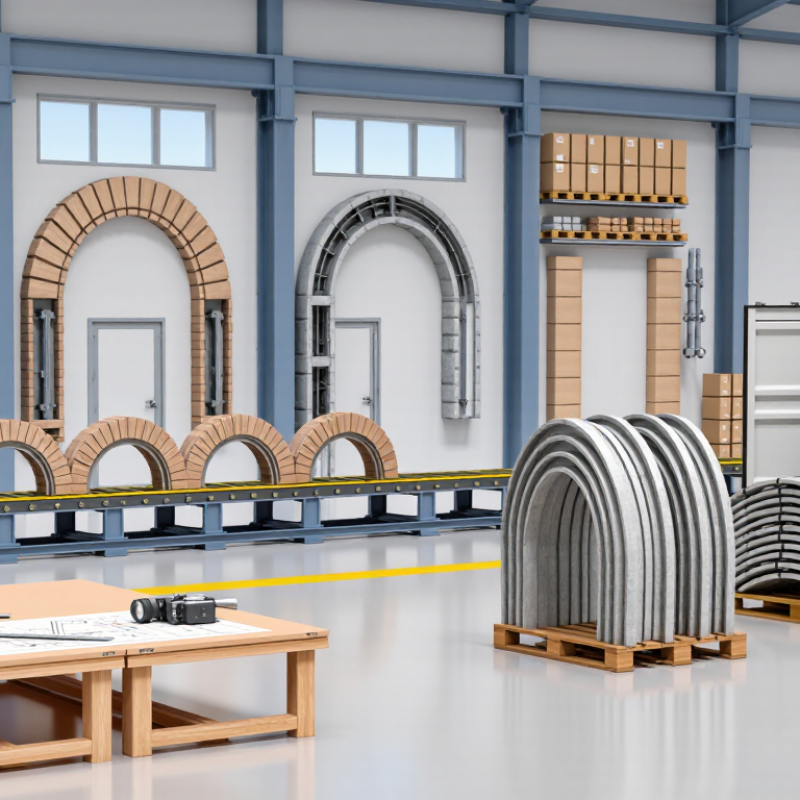
A jack arch is a shallow masonry arch built above a door or window opening. It uses wedge-shaped bricks or cut stones, with joints directed toward a shared center. Unlike a semicircular arch, it rises only slightly. That low profile suits rooms with limited ceiling height. The arch transfers wall weight toward both sides of the opening. A properly built example needs firm supports, accurate joints, and even loading. On site, a level line and temporary support can prevent early movement. Small errors matter.
Jack arches appear in brick houses, warehouses, workshops, and heritage repairs. They can frame windows, narrow doors, fireplaces, and openings beneath masonry floors. In some project searches, the phrase “Jack Arch Of Port” may describe a jack arch above a portal or port opening. The wording is not universal, so drawings should define the opening clearly. Material choice depends on span, wall thickness, moisture exposure, and local practice. For wider openings, an engineer may specify reinforcement or a different lintel system. A jack arch is not decorative filler. It carries real structural demand. I would not copy an old detail blindly. Older buildings may hide settlement, weak mortar, or uneven bearings behind attractive brickwork. That is where careful inspection becomes more valuable than appearance.
Reliable jack arch evaluation begins with measurable geometry. Inspectors check span, rise, bearing length, joint consistency, and dimensional tolerances. A few millimeters can change load distribution across a masonry opening. ASTM C67 provides testing methods for brick compressive strength, absorption, and freeze-thaw performance. These tests help buyers compare factory samples with declared specifications. They do not replace project-specific structural calculations.
Material traceability matters too. Serious manufacturers record batch numbers, curing conditions, moisture content, and test dates. For reinforced or composite systems, evaluators may also review corrosion protection and connection details. EN 845-2 can guide assessment where manufactured masonry lintel requirements apply. Its relevance must be confirmed for the actual jack arch design. Standards are useful, but careless application creates false confidence.
The 2023 Global Status Report for Buildings and Construction states that buildings consume about 30% of global final energy and produce roughly 26% of energy-related emissions. That pressure encourages durable, locally suitable masonry rather than premature replacement. Still, sustainability claims need evidence. Ask for test reports from accredited laboratories, not attractive brochures. Check whether results represent production units or one selected sample. A perfect-looking arch can conceal weak joints. I have seen documentation that was technically complete but difficult to verify. That weakness deserves attention. Weather exposure, transport vibration, and installation quality should also enter the buyer’s evaluation, because factory compliance alone cannot guarantee site performance.
Top Jack Arch Manufacturers for Global Buyers?
Leading Jack Arch Manufacturers by Regional Market
Jack arch manufacturers serve different regional needs, even when products look similar. In the United Kingdom and Ireland, buyers often prioritize traditional brick proportions, conservation details, and compatibility with older masonry. Manufacturers in these markets should provide accurate arch templates, compressive strength data, and clear installation guidance. A small measurement error can create visible gaps above a doorway.
Across continental Europe, manufacturers commonly focus on energy efficiency, factory-controlled production, and compliance documentation. Buyers may compare clay, concrete, and lightweight options based on climate and project type. In South Asia, flexible sizing and responsive technical support can matter more, especially where construction methods vary between urban and rural sites. Middle Eastern projects may require products suited to heat, dust, and rapid schedules. North American buyers often expect engineered drawings, dimensional consistency, and dependable delivery planning.
Regional knowledge matters more than a polished catalogue. A supplier should explain curing methods, reinforcement details, load assumptions, and storage conditions. Independent test reports add confidence, but they do not replace checking the actual site. A global checklist sounds efficient. It can still miss local practice.
Tips: Ask manufacturers for recent regional project references, sample sections, tolerances, and installation photos. Confirm applicable standards with a qualified engineer. Compare after-sales support, not only unit price. If product terminology differs, request a labeled drawing before ordering. Mistakes often begin with unclear words.
| Regional Market | Typical Jack Arch Format | Primary Materials | Common Applications | Key Technical Standards | Typical Buyer Requirements | Export Considerations |
|---|---|---|---|---|---|---|
| North America | Site-built or prefabricated shallow masonry arches supported between steel beams | Clay brick, structural concrete masonry units, steel bearing beams, cement-based mortar | Renovation of historic buildings, floor openings, industrial and residential masonry construction | ASTM C62 for building brick; ASTM C216 for facing brick; TMS 402/602 masonry design and construction provisions | Compressive strength, absorption, freeze-thaw performance, dimensional tolerance, mortar compatibility and engineering calculations | Palletized packaging, moisture protection, project-specific shop drawings and compliance documentation |
| Western Europe | Traditional brick jack arches and engineered masonry arch units for refurbishment and new construction | Fired clay masonry units, lime or cement-lime mortar, galvanized or painted steel supports | Heritage restoration, residential floors, façade details and low-rise commercial buildings | EN 771-1 for clay masonry units; EN 1996 for masonry design; EN 845-1 for ancillary components and lintels | CE-related documentation where applicable, water absorption, frost resistance, reaction to fire and consistent appearance | Pallet dimensions compatible with European transport, multilingual technical files and declaration of performance when required |
| South Asia | Hand-laid brick jack arches and locally produced modular clay brick arches | Burnt clay bricks, cement mortar, lime mortar and mild-steel or reinforced-concrete supports | Residential buildings, institutional projects, verandas, roof structures and restoration work | IS 1077 for common burnt clay building bricks; IS 3495 test methods; relevant national masonry design provisions | Water absorption, compressive strength, efflorescence, size consistency and resistance to local weather conditions | Protection against breakage, moisture-resistant wrapping, container loading plans and batch inspection reports |
| East Asia | Standardized fired-brick arches, precast masonry components and steel-supported shallow arches | Sintered clay brick, concrete masonry products, structural steel and cementitious mortar | Urban housing, commercial construction, civil refurbishment and architectural façade work | GB 50003 for masonry structures; GB/T 5101 for fired common bricks; project-specific seismic design requirements | Uniform dimensions, compressive strength class, water absorption, seismic suitability and traceable quality records | Export cartons or pallets, inspection before shipment, translated drawings and clearly marked product batches |
| Middle East | Clay-brick or concrete jack arches designed for hot, dry climates and masonry façade systems | Fired clay units, concrete blocks, cement mortar, galvanized steel and reinforced concrete | Villa construction, heritage-style façades, commercial buildings and interior architectural details | Applicable local building codes, ASTM or EN masonry standards, fire-resistance and structural design requirements | Low water absorption, color stability, thermal performance, dimensional accuracy and resistance to thermal cycling | Heat-resistant packaging, dust protection, outdoor storage guidance and documentation for local approval procedures |
| Southeast Asia | Clay-brick jack arches, lightweight masonry arches and custom architectural arch components | Fired clay, concrete masonry, cement mortar, stainless or galvanized steel supports | Tropical residential construction, hospitality projects, façade openings and restoration | National building codes, EN or ASTM-based project specifications, concrete and masonry durability requirements | Moisture resistance, low efflorescence, mold-resistant storage, dimensional consistency and corrosion-resistant supports | Humidity-resistant wrapping, ventilated storage instructions and careful container loading to prevent impact damage |
| Australia and New Zealand | Engineered masonry arches and traditional brick jack arches for residential and heritage applications | Clay masonry units, concrete masonry, cement-lime mortar and corrosion-protected steel components | Residential developments, heritage buildings, façades, garages and low-rise commercial projects | AS 3700 for masonry structures; AS/NZS 4455 for masonry units; project-specific fire and structural provisions | Durability, exposure classification, dimensional tolerance, structural certification and compatibility with local mortar systems | Pallet stability, fumigation or biosecurity compliance where applicable, detailed installation instructions and weather-protected storage |
Note: This table summarizes regional manufacturing and procurement characteristics without identifying individual companies or brands. Final jack arch dimensions, load capacity, support conditions and installation details must be verified by a qualified structural engineer and the applicable local building code.
Top jack arch manufacturers for global buyers combine material discipline with practical furnace engineering. Their designs commonly use high-alumina, silica, or composite refractory materials. Each option handles heat, loading, and chemical exposure differently. High-alumina sections suit demanding thermal cycles and repeated firing. Silica-based materials can perform well in specific high-temperature zones.
A Furnace Jack Arch Of Portrequires accurate dimensions and stable support points. Manufacturers usually control arch curvature through digital modeling and detailed production drawings. Interlocking segments help distribute compression across the opening. Reinforced edges reduce chipping during installation and maintenance. Some suppliers add Insulating Layers behind the working face, lowering heat loss and shell temperatures. This detail matters in large industrial furnaces.
Quality depends on more than a laboratory certificate. Experienced producers test bulk density, thermal shock resistance, crushing strength, and dimensional tolerance. They should also explain installation clearances and expansion allowances. Small errors can create uneven pressure. That risk deserves attention. Export-ready manufacturers often provide marked segments, moisture-resistant packaging, and inspection records. Still, buyers should verify test methods, service temperature, and actual project experience. Material data can look impressive, yet field conditions may expose weaknesses. A careful technical review remains essential before production approval.
Global buyers compare jack arch suppliers by evidence, not catalogue language. Begin with geometry, load capacity, and installation conditions. Ask for signed load tables and production drawings. Verify Crown(Main Arch) dimensions, reinforcement, curing method, and allowable tolerances. These details affect whether the arch fits cleanly above a door or window opening. Request test reports from accredited laboratories, using standards accepted in the destination market. A supplier’s experience should include similar spans, climates, and project volumes. Photos are useful, but traceable batch records are stronger evidence.
The World Bank’s 2023 Logistics Performance Index covered 139 economies and evaluated customs, infrastructure, shipments, and delivery reliability. Buyers should compare these factors beside the factory price. A clear shipping plan should show packaging, pallet limits, insurance, and replacement procedures. Samples help. However, one sample cannot prove long-term consistency. I would still treat optimistic lead times cautiously, especially during peak construction seasons. Sustainability also deserves measurable proof. The UNEP Global Status Report for Buildings and Construction 2024 reported that buildings consumed about 32% of global energy and produced roughly 34% of global carbon emissions. Suppliers should therefore provide material declarations, recycled-content data, or environmental product information when available. Compare documentation quality, not only discounts. Small omissions can create large site delays.
Global buyers assessing jack arch manufacturers should examine export readiness beyond attractive catalog images. A Furnace Rider Arch must match the project’s load, span, material, and installation conditions. Request drawings, dimensional tolerances, test reports, and traceable material certificates. Reliable suppliers explain their production controls instead of promising universal performance. That difference matters on a real jobsite.
Certification requirements vary by destination, application, and contract. Confirm whether the supplier can support independent inspection, factory audits, and documents required by your engineer or customs broker.
Check packing methods too. Moisture barriers, edge protection, marked bundles, and accurate commercial invoices reduce avoidable delays. Customization may include arch radius, thickness, openings, anchoring details, and surface finish.
However, every change should receive a revised drawing and written approval. A rushed modification can create an expensive mismatch. I would not treat a familiar specification as automatically suitable; local engineering review remains necessary.
Tips:
Compare at least three quotations using identical specifications. Ask for recent export references, production lead times, replacement policies, and sample approval procedures. Verify certificates with the issuing body when practical. Keep one approved drawing in the shipping file. Also, allow contingency time; estimates are often too optimistic. Small omissions can become large site problems.
A jack arch is a shallow masonry arch above a door or window. It uses wedge-shaped bricks or cut stones. The arch rises only slightly. Small errors matter.
They appear in brick houses, warehouses, workshops, and heritage repairs. Common locations include narrow doors, windows, fireplaces, and openings beneath masonry floors. The wording in project documents can vary. Clear drawings help.
It transfers wall weight toward both sides of the opening. Firm supports and accurate joints are essential. Even loading reduces movement and pressure problems. It is not decorative filler.
Workers should check the level line, supports, joints, and bearing surfaces. Temporary support can prevent early movement. The opening must match the approved dimensions. Do not rush.
High-alumina, silica-based, and composite refractory materials are common options. Each material responds differently to heat, loading, and chemical exposure. High-alumina sections suit demanding thermal cycles. Silica materials fit selected high-temperature zones.
Request bulk density, thermal shock resistance, crushing strength, and dimensional tolerances. Also request service temperature and expansion allowances. Test methods should be clearly explained. Certificates alone are not enough.
Customization may include radius, thickness, openings, anchoring details, and surface finish. Every change should receive a revised drawing. Written approval should follow. Rushed changes create mismatches.
Check moisture barriers, edge protection, marked bundles, and accurate invoices. Ask about independent inspection and factory audits. Confirm documents with your engineer or customs broker. Allow extra time.
Compare at least three quotations with identical specifications. Review export references, lead times, replacement policies, and sample procedures. Verify certificates with the issuing body when practical. Estimates can be optimistic.
Attractive brickwork may conceal settlement, weak mortar, or uneven bearings. Old details should not be copied automatically. Local engineering review remains valuable. Appearance can mislead.
A Jack Arch is a shallow, curved masonry or prefabricated structural element commonly used above openings such as doors, windows, and passageways. Its design helps distribute loads while adding architectural character to residential, commercial, and industrial buildings. This article explains how manufacturers are evaluated through dimensional accuracy, load performance, material consistency, production quality, and compliance with recognized construction standards.
It also compares leading Jack Arch manufacturers by regional market, focusing on their material choices, engineering features, production capacity, and ability to support different project requirements. Global buyers can assess suppliers by reviewing technical documentation, factory capabilities, quality-control procedures, export experience, certifications, packaging, lead times, and communication efficiency. Custom dimensions, reinforcement options, surface finishes, and project-specific engineering may also influence purchasing decisions. Careful comparison enables buyers to select a reliable supplier that offers consistent quality, practical customization, and dependable international delivery.