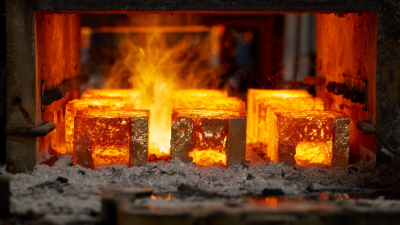
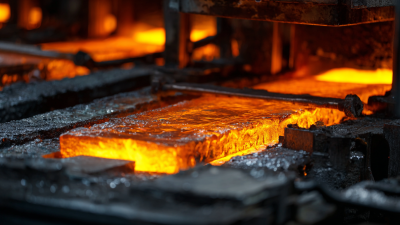
The performance of a Glass Furnace Burner Block really impacts how stable the furnace operates, how efficiently it uses fuel, and how long it stays in good shape. This component gets hit directly by flames, endures quick temperature swings, faces corrosive vapors, and deals with mechanical stresses. Even tiny flaws can cause visible hot spots or speed up glass contamination, which nobody wants.
According to the European Commission’s Best Available Techniques Reference Document for Glass Manufacturing, key operational factors include controlling combustion, choosing the right refractory materials, and recovering heat efficiently. They also point out that a more efficient furnace means lower energy use and fewer emissions. The International Energy Agency describes glassmaking as an energy-heavy process that needs better thermal efficiency and more flexible fuel options. These insights really help when you're trying to pick the right suppliers—it's not just about what’s in the catalog but understanding how they perform in real-world conditions.
Dr. John C. Mauro, a well-known glass scientist and ex-Corning researcher, summed it up nicely by saying, “Glass performance depends on composition, processing, and thermal history.” That definitely applies to burner blocks, too. Choosing the material grade alone doesn’t guarantee they’ll last. It’s equally important to consider design precision, how well they’re installed, the flame pattern, and the skill of the operators.
In this overview, we took a look at ten manufacturers—Saint-Gobain, RHI Magnesita, Vesuvius, Calderys, Krosaki Harima, Dalmia Bharat Refractories, IFGL Refractories, Glass Service, FCT Combustion, and North American Refractories. They each bring different strengths across silica, zircon, alumina, and fused-cast solutions. Keep in mind, there’s no one-size-fits-all ranking. Factors like furnace size, fuel type, glass chemistry, and regional support can really change which option works best for your specific setup. It’s something many buyers tend to overlook. That's why it’s smart to compare performance data with your plant records, lab tests, and references before making a decision.
What Is a Glass Furnace Burner Block?
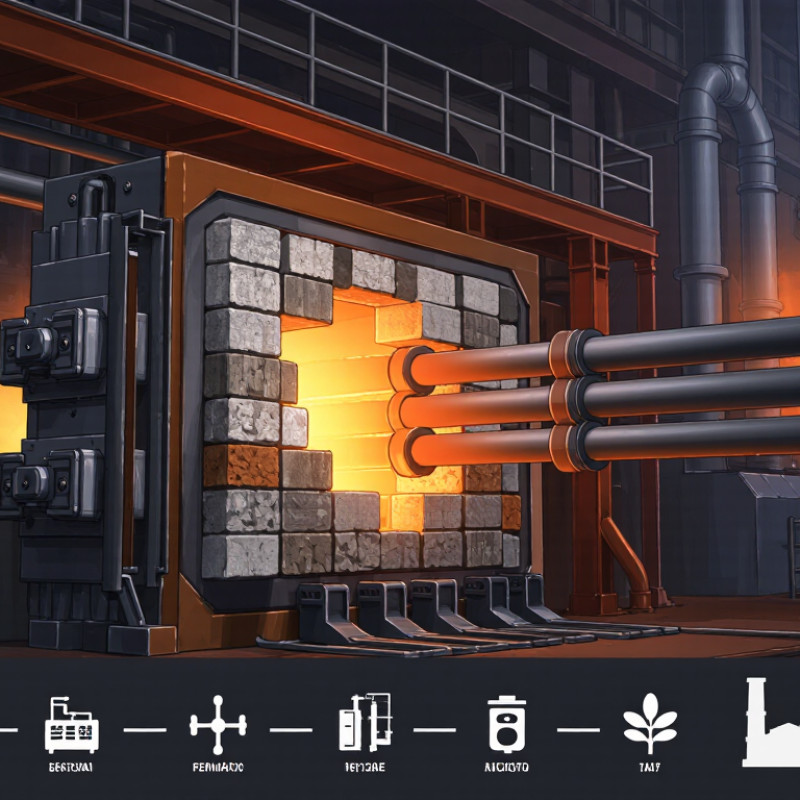
A Glass Furnace Burner Block is a shaped refractory component installed around the burner port. It protects the furnace wall from flame, heat, dust, and corrosive vapors. The opening through it is commonly called aGlass Furnace Burner Hole. This passage controls how fuel and air enter the combustion space. Its geometry can influence flame length, heat distribution, and glass quality.
The block usually contains dense, high-alumina, fused-cast, or zirconia-based refractory material. Selection depends on furnace temperature, fuel type, flame position, and glass chemistry. The European Commission’s Glass Manufacturing BREF reports furnace energy use of roughly 3–40 GJ per tonne, depending on the glass process and furnace design. This wide range shows why burner-block design cannot be separated from thermal efficiency. A small edge failure may create heat leakage, local overheating, or unstable combustion. It may look minor. It is not.
Tips: Check the burner hole for oval wear, cracks, dark deposits, and exposed insulation during scheduled inspections. Measure the opening, rather than judging it by sight. Follow the refractory supplier’s installation temperature limits. A perfect design rarely exists; operating data should challenge the original assumptions. Flame observation, oxygen readings, and repair history can reveal whether the block is truly performing.
How Glass Furnace Burner Blocks Are Made
China Top 10 Glass Furnace Burner Block Manufacturers
Glass furnace burner blocks begin with a carefully selected refractory mix. Common materials include fused-cast alumina-zirconia-silica, high-alumina grades, and silica refractories. Each choice responds to temperature, corrosion, and flame chemistry. The European Commission’s Glass Manufacturing BREF reports melting energy use of roughly 3.5–40 GJ per tonne, depending on the glass process. That wide range shows why burner geometry cannot follow one standard pattern.
Manufacturers normally batch raw materials, mold the block, and fire or fuse it under controlled conditions. Dimensional accuracy matters around the burner port. A few millimeters can disturb flame coverage or create local hot spots. The Glass Furnace Back Wall Of Burner must also tolerate thermal cycling and alkali vapor attack. Technicians inspect density, apparent porosity, strength, and visible cracks before shipment. Small flaws matter.
Installation requires more than fitting the block into steelwork. Workers check expansion gaps, burner alignment, anchoring, and gradual furnace dry-out. The U.S. Department of Energy’s Industrial Decarbonization Roadmap identifies process heating as about 51% of manufacturing energy use, making heat efficiency a serious engineering concern. Still, laboratory data cannot fully predict every furnace. Operator experience remains essential. A design may look efficient on paper, yet perform poorly after years of dust, flame movement, and uneven cooling.
Key Criteria for Ranking the Top 10 Manufacturers
Ranking China’s top 10 glass furnace burner block manufacturers requires more than comparing prices or catalog sizes. The review should begin with verified production experience in continuous glass operations. Site audits can reveal whether machining, casting, and firing are controlled consistently. Small details matter, such as dimensional tolerance around burner openings and surface quality after firing.
Technical performance carries the greatest weight. A strong manufacturer should provide test data on thermal shock resistance, corrosion behavior, porosity, and service temperature. Refractory composition must match the furnace atmosphere, fuel type, and glass batch chemistry. Custom design capability also matters when a furnace has unusual port geometry or restricted maintenance access. Ask for drawings, inspection records, and sample reports. Vague claims are weak evidence.
Reliability includes traceable raw materials, documented quality checks, and realistic delivery schedules. After-sales support should cover installation guidance, operating feedback, and failure analysis. Safety compliance and responsible production practices must be verified through current records, not attractive promises. Customer references from comparable furnace sizes add practical authority. However, no ranking is perfectly objective. Some manufacturers publish limited data, while others may overstate results. A fair evaluation should record these gaps openly, compare identical criteria, and leave room for correction when new operating evidence appears.
China Top 10 Glass Furnace Burner Block Manufacturers - Key Criteria for Ranking the Top 10 Manufacturers
| Rank | Ranking Criterion | Weight | Objective Evaluation Indicators | Recommended Evidence |
| 1 | Refractory Material Quality | 18% | Chemical composition, apparent porosity, bulk density, Cold Crushing Strength, permanent linear change, and resistance to thermal shock. | Independent laboratory reports, batch certificates, technical data sheets, and test results based on applicable refractory standards. |
| 2 | High-Temperature Performance | 15% | Maximum recommended service temperature, resistance to furnace atmosphere, corrosion resistance against glass vapors, and stability during repeated firing cycles. | Application temperature range, corrosion test data, thermal-cycle records, and references from operating glass furnaces. |
| 3 | Dimensional Accuracy | 12% | Dimensional tolerance, flatness, squareness, burner-port alignment, nozzle-seat accuracy, and compatibility with the furnace design. | Inspection records, dimensional drawings, coordinate-measuring reports, and approved customer drawings. |
| 4 | Manufacturing Capability | 12% | Availability of high-temperature firing, precision machining, controlled drying, raw-material processing, and non-destructive inspection. | Factory audit, production-capacity records, equipment list, process-control plans, and quality-control procedures. |
| 5 | Thermal Expansion and Joint Compatibility | 10% | Compatibility of thermal expansion behavior with adjacent furnace refractories, burner assemblies, steel supports, and expansion-joint design. | Thermal expansion curves, installation drawings, joint recommendations, and engineering calculations. |
| 6 | Quality Management and Traceability | 9% | Lot identification, raw-material traceability, documented inspections, calibration control, non-conformance handling, and corrective-action procedures. | ISO 9001 certificate, quality manual, inspection plans, calibration records, and sample certificates of conformity. |
| 7 | Engineering and Customization Support | 8% | Ability to produce custom burner-port geometry, installation interfaces, cooling features, lifting points, and replacement parts for different furnace layouts. | Engineering drawings, technical calculation examples, revision-control records, and project-specific design support. |
| 8 | Compliance and Safety Documentation | 6% | Conformity of manufacturing and installation documentation with relevant refractory, industrial furnace, occupational safety, and environmental requirements. | Compliance statements, safety data, installation manuals, risk assessments, and applicable management-system certificates. |
| 9 | Delivery Reliability and Packaging | 5% | Production lead time, export experience, protective packaging, moisture control, lifting instructions, and ability to meet project schedules. | On-time delivery records, packaging specifications, logistics procedures, and shipment inspection photographs. |
| 10 | Lifecycle Cost and After-Sales Service | 5% | Total cost of ownership, expected service life, replacement availability, installation guidance, warranty terms, and response time for technical issues. | Itemized quotations, warranty policy, spare-part records, service procedures, and documented customer-support performance. |
| Total Evaluation Weight | 100% | Manufacturers can be scored against the same evidence-based criteria to create a transparent ranking. |
Scoring method: assign each criterion a score from 0 to 10, multiply by the stated weight, and total the weighted results. Final rankings should be verified through technical documentation, factory audits, sample inspections, and customer reference checks.
Top 10 Glass Furnace Burner Block Manufacturers
China Top 10 Glass Furnace Burner Block Manufacturers
China’s glass sector demands refractory burner blocks that tolerate intense heat, flame impact, and chemical corrosion. The International Energy Agency reports that industry consumes about 37% of global final energy. Furnace efficiency therefore affects both production cost and emissions.
A reliable Top 10 manufacturer assessment should examine alumina content, thermal shock resistance, bulk density, and dimensional accuracy. Practical experience shows that small gaps around a burner block can create flame instability and localized overheating. Manufacturers with controlled casting, precise machining, and documented batch testing deserve stronger consideration. ASTM C20 testing can verify apparent porosity, water absorption, and bulk density. These details matter more than attractive product photographs.
China’s National Bureau of Statistics continues to report large annual glass output, creating steady demand for furnace maintenance materials. However, a ranking can mislead when it relies only on export volume or website claims. I would review plant references, replacement intervals, inspection records, and technical support before selecting a supplier. The best candidates should provide composition certificates and test results for each production batch. Some suppliers may still lack complete long-term data. That weakness deserves honest attention.
China Top 10 Glass Furnace Burner Block Manufacturers — Material Performance Benchmark
Indicative continuous service-temperature ranges for refractory materials commonly used in glass furnace burner blocks. Values vary by grade, furnace atmosphere, burner design, and operating conditions.
The chart compares material categories rather than individual companies or brands, providing a neutral technical reference for evaluating burner block manufacturers.
Main Products and Technologies Offered by Leading Manufacturers
Leading glass furnace burner block manufacturers supply more than refractory shapes. Their main products include high-alumina, fused-cast AZS, silica, and zircon-based burner blocks. These materials protect openings from flame erosion, alkali vapors, and repeated thermal shock. Precise CNC machining helps maintain stable flame geometry. Some suppliers also provide custom anchoring systems and replacement blocks for the Furnace Back Wall Of Burner.
Modern manufacturers increasingly combine refractory design with combustion engineering. Regenerative and oxy-fuel burner systems can reduce fuel demand and nitrogen oxide emissions when correctly matched to the furnace. The U.S. Department of Energy’s Industrial Decarbonization Roadmap identifies process heating as about 51% of industrial energy use. The European Commission’s Glass BREF also notes that furnace design and combustion control strongly influence emissions and efficiency. Still, performance depends on glass chemistry, furnace age, and operator settings. Data sheets alone are not enough.
Tips: Check thermal expansion values, open-porosity data, and burner-port dimensions before purchasing. Ask for test results under comparable furnace temperatures. A perfect model is unlikely. Inspect the block face, joints, and flame pattern during maintenance visits. Small cracks near the throat may signal poor installation, unsuitable material, or uneven cooling. Manufacturers offering CFD support, heat mapping, and installation guidance usually provide more practical value than suppliers selling refractory parts alone.
How to Select the Right Burner Block Manufacturer
China Top 10 Glass Furnace Burner Block Manufacturers
Selecting a burner block manufacturer requires more than comparing prices. Check its experience with your furnace type, fuel, glass composition, and operating temperature. A reliable supplier should explain material choices clearly. Ask for test data, dimensional records, and recent project references. Vague answers deserve attention.
Inspect the production process before placing an order. Look for controlled mixing, pressing, drying, firing, and final inspection. The burner block should resist thermal shock, chemical attack, erosion, and repeated heating cycles. For a Glass Furnace Bubbling Block, review the pore structure and gas distribution carefully. Small defects can disturb bubbling and create uneven glass quality. Request samples when possible.
Technical communication matters. Engineers should confirm drawings, burner openings, installation tolerances, and cooling conditions. Response speed is useful, but accurate answers matter more. Ask how the manufacturer handles nonconforming pieces and replacement schedules. Traceable batch numbers can support future investigations. I have seen projects delayed by a single millimeter of mismatch. That mistake was preventable.
Do not rely only on polished factory photos. A site audit, video inspection, or independent quality check can reveal more. Compare warranty terms, packaging methods, and export documentation. The cheapest offer may carry hidden installation risks. I would also question suppliers who promise zero failure. Refractory components face harsh, changing conditions, and even strong designs need regular review.
High-Purity Fused Cast Zirconia Blocks: A Reliable Choice for Glass Furnace Applications
High-purity Fused Cast Zirconia Blocks are a reliable refractory solution for demanding glass furnace applications. According to the U.S. Geological Survey’s *Mineral Commodity Summaries 2024*, global zirconium mineral concentrate production was estimated at approximately 1.5 million metric tons in 2023, reflecting the material’s importance across advanced industrial sectors. In glassmaking, zirconia is valued for its high chemical stability and resistance to attack by aggressive molten glass. The RTK-Z9510 contains more than 89% zirconium and has a melting temperature above 2800℃, supporting durable performance in high-temperature furnace zones.
Its Baddeleyite crystal phase provides strong corrosion resistance and a low foaming rate, helping minimize refractory wear and reduce the risk of inclusions or contamination in molten glass. These properties are especially important where optical quality, dimensional stability, and process consistency are required. The European Commission’s *Best Available Techniques Reference Document for the Manufacture of Glass* also emphasizes the importance of selecting refractory materials that withstand thermal and chemical stresses while limiting product contamination.
Manufactured from high-purity zirconia, these fused cast blocks are suitable for liquid crystal substrate, high-alumina, borosilicate, halogen lighting, glass-ceramic, and glass fiber furnaces. Their combination of purity, high-temperature resistance, and low interaction with molten glass makes them well suited to specialized glass production and continuous furnace operation.
FAQS
Common products include high-alumina, fused-cast AZS, silica, and zircon-based burner blocks. They may also provide replacement blocks, anchoring systems, and custom-machined shapes. Data sheets are insufficient. Ask for dimensions, material properties, and furnace-specific test results.
A suitable block should resist flame erosion, alkali vapors, chemical attack, and repeated thermal shock. It must also tolerate high temperatures and uneven cooling. Small cracks matter. Inspect the face, joints, throat, and nearby cooling areas during maintenance.
Match the material to the glass chemistry, fuel type, operating temperature, and furnace design. Review thermal expansion, open porosity, corrosion resistance, and erosion data. A material that works elsewhere may fail in your furnace. That detail is easy to underestimate.
Burner openings influence flame shape, heat distribution, and combustion stability. Even a one-millimeter mismatch can delay installation or disturb flame geometry. Confirm drawings, tolerances, cooling conditions, and anchoring details before production. Measure twice.
Check mixing, pressing, drying, firing, machining, and final inspection procedures. Ask how workers control dimensional accuracy and identify internal defects. Request batch numbers and inspection records for future troubleshooting. Photos alone prove little.
Useful support may include installation drawings, anchoring guidance, cooling recommendations, CFD analysis, and heat mapping. Engineers should explain joint design and acceptable tolerances clearly. Fast replies help, but accurate replies matter more. Poor installation can resemble material failure.
Compare furnace experience, technical communication, test data, warranty terms, packaging, and replacement procedures. Request recent project references involving similar temperatures and glass compositions. A site audit or independent inspection may reveal hidden risks. The cheapest offer is not always economical.
Regenerative and oxy-fuel systems may reduce fuel demand and nitrogen oxide emissions when correctly matched. Results depend on furnace age, glass chemistry, burner settings, and operator control. Process heating consumes substantial industrial energy. I would avoid promises of perfect savings.
Review pore structure, gas distribution, dimensions, and surface quality carefully. Small defects can create uneven bubbling and inconsistent glass quality. Request samples when possible, then compare them with approved drawings. Inspection should continue after installation.
Conclusion
A Glass Furnace Burner Block is a heat-resistant component installed around the burner openings of a glass melting furnace. It helps direct and stabilize flames, protect furnace walls, improve heat transfer, and support consistent melting performance. This article explains how burner blocks are produced, including material selection, forming, drying, firing, machining, and quality inspection. It also examines the technical standards used to evaluate leading manufacturers, such as thermal shock resistance, corrosion resistance, dimensional accuracy, service life, production capacity, and customized design capabilities.
The overview compares the main products and technologies available from the top ten manufacturers without focusing on brand names. It also highlights factors that buyers should consider when selecting a supplier, including raw material quality, manufacturing experience, testing procedures, delivery reliability, technical support, and compatibility with a specific furnace design. By understanding these points, glass producers can choose a suitable burner block solution that improves operational stability, reduces maintenance needs, and supports efficient, long-term furnace performance.